Home Blog Page 109

Siera Bearchell Recalls Starving Herself for Miss Universe Canada

0

The last time you filled out a job application, you probably didn’t have to complete a section asking for your height, your weight and a swimsuit photo. But go to the “Become a Contestant” page on the Miss Universe Canada website and there it is, nestled between birthdate and address. It’s astonishing—after years of extended sizing entering the mainstream and the likes of Lizzo and Rihanna celebrating beauty diversity—that in 2022, the famously fatphobic competition still exists. And it’s equally surprising that Siera Bearchell entered the competition at all, let alone used it as a body positivity platform.

Pageants were never on Bearchell’s radar. A straight-A student, athlete and dancer who grew up in Moose Jaw, Sask., she was 15 and heading toward medical school when a candle in her family’s apartment set a tissue box on fire. “I was the first to call 911,” she says. “We lost everything. We didn’t even have renters insurance to help us recover.” Instead, the community rallied around her family, launching fundraising efforts and even putting them up in a hotel while they searched for a new home.

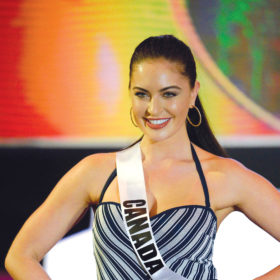
MISS UNIVERSE SWIMWEAR FASHION SHOW 2016. Photography courtesy of Getty

A Facebook ad for the Miss Teen Saskatchewan pageant caught Bearchell’s attention in the aftermath of the fire. “It said, ‘Be a leader in your community today,’ and it appealed to me as I was blown away by the help we had received from our neighbourhood,” she recalls. Shortly after, she entered the competition, winning the title of Miss Teen Saskatchewan, followed by Miss Teen Canada.

Bearchell’s glossy good looks, academic success and desire to make a difference in the world made her perfect pageant fodder. Using her newly public profile, she became an ambassador and volunteer with the Red Cross, speaking at schools and events about disaster preparedness and fire relief, drawing on her own experiences. “It was an opportunity to have a global platform that a girl like me from Moose Jaw would never have had otherwise,” she laughs, adding, “That sounds so hillbilly.”

While Siera Bearchell celebrates Saskatchewan’s sense of community, she has conflicted feelings about the small-town attitude toward anyone “different” as her family felt they couldn’t discuss their Metis heritage. “In Moose Jaw, being Indigenous is something you want to hide,” she explains. “I’m still learning about my ancestry. I feel like I’m an imposter as I’m visibly white but my mom is darker and has more obvious traits. I’m trying to find a way to make it authentic to me.” Even though Bearchell is still exploring her Indigenous identity, she is thrilled to be the first person of Indigenous ancestry to place in the Miss Universe competition. Since leaving Moose Jaw, she has become much more aware of how she can use both her law degree and her public platform to make positive changes for Canada’s Indigenous population.


View this post on Instagram


A post shared by Siera Bearchell (@sierabearchell)

Authenticity has become a driving force for Siera Bearchell and is something she struggled with as she transitioned from national to international stages and her body began to change. “I went from being that teenage girl who was so skinny that people would tell me to eat a cheeseburger to becoming more athletic and curvy in my 20s.” When she entered the Miss Universe contest in 2013, Bearchell was told she had a good chance of winning if she lost weight. “I was instructed to eat as little as possible, and if I was really struggling, I could have a chicken breast with some greens once a day.”

At the time, Bearchell was balancing her pageant life with her law studies at the University of Saskatchewan and reveals that she often had trouble focusing because she was running on empty. “Some days, I would have a single protein bar, half in the morning and the other half later, and then do hours of workouts,” she recalls. “I was so hungry that I had trouble falling asleep at night. But I believed this was what I had to do to succeed.” And after all that, Bearchell didn’t even make it to being a finalist.

When she looks back at photos of herself from that time, all Bearchell remembers is feeling miserable, despite her megawatt smile and size 0 figure. Naturally competitive, she decided in 2016 that she wanted to enter the competition once again—this time as a healthy, strong size 8, having just completed her first marathon. “I thought, ‘I’ll do this my way,’ she says. “My body might not have been what the pageant world wanted, but I was proud of it. I wanted to be a person people could look up to and wholeheartedly be myself.”

Despite her positive outlook, Bearchell faced an immediate backlash. In the world of pageants, where extra small is the only acceptable size, her mid-size frame (which is largely considered a medium by most retailers) garnered her comparisons to a whale on social media. Body shamers mockingly circulated photos of her in a swimsuit, and she was even accused of promoting obesity. “It was so intense that the Miss Universe committee checked in with me to see if I was OK,” she says.

But rather than breaking under the pressure and negativity, Siera Bearchell decided to combat it on social media by posting affirmations of self-acceptance and body positivity. And while she’s the first to acknowledge the absurdity of a 30-inch waist being considered plus-size, her mission was to shine a light on the unhealthy body standards of the competition and encourage future beauty queens to adopt greater self-worth and self-love.

That year, she won Miss Universe Canada and placed ninth in the global competition. “Body positivity and body confidence became my unintentional platform,” she says. “Yes, I had trolls and faced many nasty comments, but I also had so many people supporting me and thanking me for being myself.” She feels that her success directly reflects the changing values of society. “Now, when you go to the beach, you see all different body types.”

As Bearchell crossed another stage—this time to collect her law degree—she was newly pregnant and knew she wouldn’t be able to pursue law right away. Instead, she started sharing her pregnancy with the social media audience she’d built up during her years of pageantry. “I took on the expectations surrounding women and their bodies during pregnancy,” she says. “I was struck by the fact that after you spend nine months growing a human being, the first thing people start talking about is your body ‘bouncing back.’ You’ve become a mother! You have to love yourself and your child, not worry about losing the baby weight.”

BEARCHELL AND LILLY. Photography VIA INSTAGRAM/ @SIERABEARCHELL

As her baby bump grew, so did her followers, and offers for paid partnerships began to materialize. Bearchell put her law degree to good use, negotiating contracts and brand collaborations. One hundred seventy-six thousand followers later, she has published three e-books, runs mentorship programs with catchy titles like “Do You Want to Win the Crown?” and is a successful entrepreneur. And in the process, she has unwittingly become a fashion icon for her fans. “It took me a while to find my style,” she says. “I’m from a small town where you are scared to stand out.” Citing Victoria Beckham as her style inspiration — “she’s feminine but with an edge” — she loves shopping for timeless pieces and has recently discovered resale, thanks to websites like Poshmark.

Siera Bearchell believes she is making a better, more inclusive world for her three-year-old daughter, Lilly, her baby on the way (in March, she announced that she is pregnant) and the generations of girls growing up with social media. And, indeed, gains are being made everywhere—from the body-conscious world of surfing, where @curvysurfergirl is flipping the bird to the sport’s accepted physique, to high fashion, where brands like Erdem are creating clothes up to size 22. And, yes, Bearchell realizes her current size 6 frame is considered thin. Still, she knows what it’s like to be very publicly criticized for her body’s shape and believes that no one should have to experience the abuse she once did. “The underlying thing I’m passionate about is for women to feel they can truly be themselves, whatever that looks like,” she says. Because no matter our height, weight or size, we’re all so much more than a swimsuit photo.

Swipe through the gallery below to see some of the items on Siera Bearchell’s must-have list, including heritage handbags and brightening beauty products.


This article first appeared in FASHION’s October issue. Find out more here.

The post Siera Bearchell Recalls Starving Herself for Miss Universe Canada appeared first on FASHION Magazine.
The last time you filled out a job application, you probably didn’t have to complete a section asking for your height, your weight and a swimsuit photo. But go to the “Become a Contestant” page on the Miss Universe Canada website and there it is, nestled between birthdate and address. It’s astonishing—after years of extended sizing entering the mainstream and the likes of Lizzo and Rihanna celebrating beauty diversity—that in 2022, the famously fatphobic competition still exists. And it’s equally surprising that Siera Bearchell entered the competition at all, let alone used it as a body positivity platform.

Pageants were never on Bearchell’s radar. A straight-A student, athlete and dancer who grew up in Moose Jaw, Sask., she was 15 and heading toward medical school when a candle in her family’s apartment set a tissue box on fire. “I was the first to call 911,” she says. “We lost everything. We didn’t even have renters insurance to help us recover.” Instead, the community rallied around her family, launching fundraising efforts and even putting them up in a hotel while they searched for a new home.

MISS UNIVERSE SWIMWEAR FASHION SHOW 2016. Photography courtesy of Getty

A Facebook ad for the Miss Teen Saskatchewan pageant caught Bearchell’s attention in the aftermath of the fire. “It said, ‘Be a leader in your community today,’ and it appealed to me as I was blown away by the help we had received from our neighbourhood,” she recalls. Shortly after, she entered the competition, winning the title of Miss Teen Saskatchewan, followed by Miss Teen Canada.

Bearchell’s glossy good looks, academic success and desire to make a difference in the world made her perfect pageant fodder. Using her newly public profile, she became an ambassador and volunteer with the Red Cross, speaking at schools and events about disaster preparedness and fire relief, drawing on her own experiences. “It was an opportunity to have a global platform that a girl like me from Moose Jaw would never have had otherwise,” she laughs, adding, “That sounds so hillbilly.”

While Siera Bearchell celebrates Saskatchewan’s sense of community, she has conflicted feelings about the small-town attitude toward anyone “different” as her family felt they couldn’t discuss their Metis heritage. “In Moose Jaw, being Indigenous is something you want to hide,” she explains. “I’m still learning about my ancestry. I feel like I’m an imposter as I’m visibly white but my mom is darker and has more obvious traits. I’m trying to find a way to make it authentic to me.” Even though Bearchell is still exploring her Indigenous identity, she is thrilled to be the first person of Indigenous ancestry to place in the Miss Universe competition. Since leaving Moose Jaw, she has become much more aware of how she can use both her law degree and her public platform to make positive changes for Canada’s Indigenous population.


View this post on Instagram


A post shared by Siera Bearchell (@sierabearchell)

Authenticity has become a driving force for Siera Bearchell and is something she struggled with as she transitioned from national to international stages and her body began to change. “I went from being that teenage girl who was so skinny that people would tell me to eat a cheeseburger to becoming more athletic and curvy in my 20s.” When she entered the Miss Universe contest in 2013, Bearchell was told she had a good chance of winning if she lost weight. “I was instructed to eat as little as possible, and if I was really struggling, I could have a chicken breast with some greens once a day.”

At the time, Bearchell was balancing her pageant life with her law studies at the University of Saskatchewan and reveals that she often had trouble focusing because she was running on empty. “Some days, I would have a single protein bar, half in the morning and the other half later, and then do hours of workouts,” she recalls. “I was so hungry that I had trouble falling asleep at night. But I believed this was what I had to do to succeed.” And after all that, Bearchell didn’t even make it to being a finalist.

When she looks back at photos of herself from that time, all Bearchell remembers is feeling miserable, despite her megawatt smile and size 0 figure. Naturally competitive, she decided in 2016 that she wanted to enter the competition once again—this time as a healthy, strong size 8, having just completed her first marathon. “I thought, ‘I’ll do this my way,’ she says. “My body might not have been what the pageant world wanted, but I was proud of it. I wanted to be a person people could look up to and wholeheartedly be myself.”

Despite her positive outlook, Bearchell faced an immediate backlash. In the world of pageants, where extra small is the only acceptable size, her mid-size frame (which is largely considered a medium by most retailers) garnered her comparisons to a whale on social media. Body shamers mockingly circulated photos of her in a swimsuit, and she was even accused of promoting obesity. “It was so intense that the Miss Universe committee checked in with me to see if I was OK,” she says.

But rather than breaking under the pressure and negativity, Siera Bearchell decided to combat it on social media by posting affirmations of self-acceptance and body positivity. And while she’s the first to acknowledge the absurdity of a 30-inch waist being considered plus-size, her mission was to shine a light on the unhealthy body standards of the competition and encourage future beauty queens to adopt greater self-worth and self-love.

That year, she won Miss Universe Canada and placed ninth in the global competition. “Body positivity and body confidence became my unintentional platform,” she says. “Yes, I had trolls and faced many nasty comments, but I also had so many people supporting me and thanking me for being myself.” She feels that her success directly reflects the changing values of society. “Now, when you go to the beach, you see all different body types.”

As Bearchell crossed another stage—this time to collect her law degree—she was newly pregnant and knew she wouldn’t be able to pursue law right away. Instead, she started sharing her pregnancy with the social media audience she’d built up during her years of pageantry. “I took on the expectations surrounding women and their bodies during pregnancy,” she says. “I was struck by the fact that after you spend nine months growing a human being, the first thing people start talking about is your body ‘bouncing back.’ You’ve become a mother! You have to love yourself and your child, not worry about losing the baby weight.”

BEARCHELL AND LILLY. Photography VIA INSTAGRAM/ @SIERABEARCHELL

As her baby bump grew, so did her followers, and offers for paid partnerships began to materialize. Bearchell put her law degree to good use, negotiating contracts and brand collaborations. One hundred seventy-six thousand followers later, she has published three e-books, runs mentorship programs with catchy titles like “Do You Want to Win the Crown?” and is a successful entrepreneur. And in the process, she has unwittingly become a fashion icon for her fans. “It took me a while to find my style,” she says. “I’m from a small town where you are scared to stand out.” Citing Victoria Beckham as her style inspiration — “she’s feminine but with an edge” — she loves shopping for timeless pieces and has recently discovered resale, thanks to websites like Poshmark.

Siera Bearchell believes she is making a better, more inclusive world for her three-year-old daughter, Lilly, her baby on the way (in March, she announced that she is pregnant) and the generations of girls growing up with social media. And, indeed, gains are being made everywhere—from the body-conscious world of surfing, where @curvysurfergirl is flipping the bird to the sport’s accepted physique, to high fashion, where brands like Erdem are creating clothes up to size 22. And, yes, Bearchell realizes her current size 6 frame is considered thin. Still, she knows what it’s like to be very publicly criticized for her body’s shape and believes that no one should have to experience the abuse she once did. “The underlying thing I’m passionate about is for women to feel they can truly be themselves, whatever that looks like,” she says. Because no matter our height, weight or size, we’re all so much more than a swimsuit photo.

Swipe through the gallery below to see some of the items on Siera Bearchell’s must-have list, including heritage handbags and brightening beauty products.


This article first appeared in FASHION’s October issue. Find out more here.

The post Siera Bearchell Recalls Starving Herself for Miss Universe Canada appeared first on FASHION Magazine.


Zendaya, and a 4 kg Emerald, Star in New Bulgari Film

0

A one-hour film about the Bulgari jewellery house which premiered at TIFF this week has no shortage of celebrities. Italian influencer Chiara Ferragni, Blackpink’s Lalisa Manoban, model Lily Aldridge and actress Priyanka Chopra Jonas all make appearances. We also spend a good chunk of time with Zendaya (who just made Emmys history) in her lead-up to wearing the luxury brand at the 78th Venice International Film Festival.

But the real star of Inside the Dream is a 4 kg emerald—a dark loaf-sized rock that has brilliant green veins of precious material trapped within it. The Jaipur gem dealer whose family has owned the 21,000-carat rough gem for more than 25 years tells Bulgari creative director Lucia Silvestri that he has never had a good enough reason to cut it. But Silvestri is determined to convince him the time is right, as she is looking for an outstanding stone that will become the centrepiece of a magnificent diamond necklace.

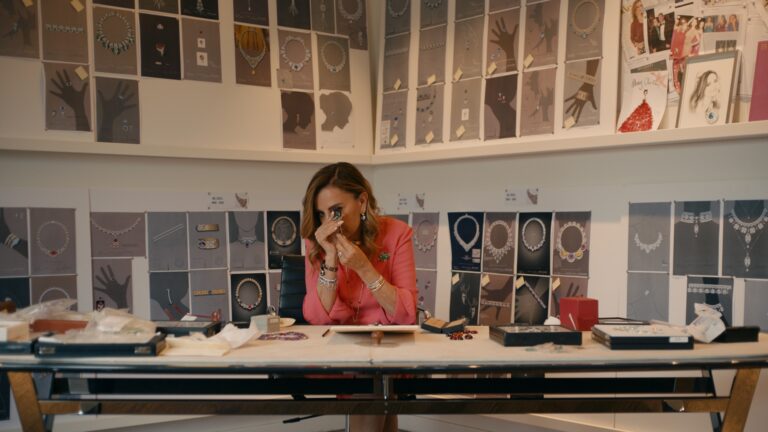
For much of the rest of the film, which launched on Amazon Prime Video on September 13, we follow Silvestri, who is possibly the only woman in the male-dominated jewellery world who buys roughs and sees them through to their final state: precious works of art. We see her at her desk in Rome with a pile of purple and pink stones, using tweezers to place them on a wax board to try out different necklace designs. We see her creative wheels spinning as she imagines a diamond snake holding a giant emerald in its mouth. And we see her meeting with laboratory technicians, as the idea in her head begins to take shape with fire and other lapidary tools.

Photo courtesy of Bulgari

Director Matthieu Menu, who previously worked on profiles of Yohji Yamamoto, Karl Lagerfeld and Simon Porte Jacquemus for an i-D magazine series called Hometown, also weaves in Bulgari history, from its founding by a Greek silversmith in 1884 to the 1960s when Hollywood stars such as Elizabeth Taylor discovered the Bulgari shop on days off from shooting at the Cinecitta studios in Rome, then insisted on wearing the purchases onscreen. “It was the original product placement and not only was it free, they paid us,” quipped Bulgari CEO Jean-Christophe Babin prior to the screening at TIFF Bell Lightbox.

Jewellery and fashion lovers will appreciate the behind-the-scenes glimpses of campaign shoots and how a 4 kg rock transforms into a 93.83-carat cabochon for the Serpenti Hypnotic Emerald necklace on Zendaya in Venice. But good luck resisting the temptation to head to bulgari.com immediately after the film for a little retail reconnaissance. Silvestri’s own jewellery is a greatest hits of Bulgari design and you’ll be wanting to sell your car or condo to own your own viper ring or Roman coin necklace by the movie’s end.

The post Zendaya, and a 4 kg Emerald, Star in New Bulgari Film appeared first on FASHION Magazine.
A one-hour film about the Bulgari jewellery house which premiered at TIFF this week has no shortage of celebrities. Italian influencer Chiara Ferragni, Blackpink’s Lalisa Manoban, model Lily Aldridge and actress Priyanka Chopra Jonas all make appearances. We also spend a good chunk of time with Zendaya (who just made Emmys history) in her lead-up to wearing the luxury brand at the 78th Venice International Film Festival.

But the real star of Inside the Dream is a 4 kg emerald—a dark loaf-sized rock that has brilliant green veins of precious material trapped within it. The Jaipur gem dealer whose family has owned the 21,000-carat rough gem for more than 25 years tells Bulgari creative director Lucia Silvestri that he has never had a good enough reason to cut it. But Silvestri is determined to convince him the time is right, as she is looking for an outstanding stone that will become the centrepiece of a magnificent diamond necklace.

For much of the rest of the film, which launched on Amazon Prime Video on September 13, we follow Silvestri, who is possibly the only woman in the male-dominated jewellery world who buys roughs and sees them through to their final state: precious works of art. We see her at her desk in Rome with a pile of purple and pink stones, using tweezers to place them on a wax board to try out different necklace designs. We see her creative wheels spinning as she imagines a diamond snake holding a giant emerald in its mouth. And we see her meeting with laboratory technicians, as the idea in her head begins to take shape with fire and other lapidary tools.

Photo courtesy of Bulgari

Director Matthieu Menu, who previously worked on profiles of Yohji Yamamoto, Karl Lagerfeld and Simon Porte Jacquemus for an i-D magazine series called Hometown, also weaves in Bulgari history, from its founding by a Greek silversmith in 1884 to the 1960s when Hollywood stars such as Elizabeth Taylor discovered the Bulgari shop on days off from shooting at the Cinecitta studios in Rome, then insisted on wearing the purchases onscreen. “It was the original product placement and not only was it free, they paid us,” quipped Bulgari CEO Jean-Christophe Babin prior to the screening at TIFF Bell Lightbox.

Jewellery and fashion lovers will appreciate the behind-the-scenes glimpses of campaign shoots and how a 4 kg rock transforms into a 93.83-carat cabochon for the Serpenti Hypnotic Emerald necklace on Zendaya in Venice. But good luck resisting the temptation to head to bulgari.com immediately after the film for a little retail reconnaissance. Silvestri’s own jewellery is a greatest hits of Bulgari design and you’ll be wanting to sell your car or condo to own your own viper ring or Roman coin necklace by the movie’s end.

The post Zendaya, and a 4 kg Emerald, Star in New Bulgari Film appeared first on FASHION Magazine.


All Our Favourite Looks from the 2022 Emmys

0

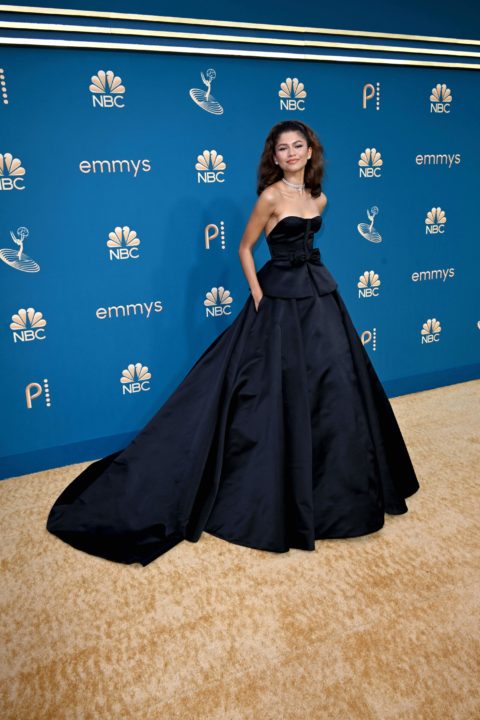
The biggest night in TV has come again, and with it, a parade of glamourous looks on the Emmys 2022 red carpet in downtown Los Angeles on Monday night.

Hosted by Saturday Night Live star Kenan Thompson, the 74rd Primetime Emmy Awards celebrated the best in television with shows such as Succession, White Lotus, Ted Lasso, Euphoria, Severance and Squid Game.

This year’s nominees, presenters and other celebrity guests donned designers like Louis Vuitton and Dior to Gucci, Sharon Long and more.

From Zendaya and Elle Fanning to Hoyeon Jung and Seth Rogen, check out some of the glitzy evening’s best-dressed.

The post All Our Favourite Looks from the 2022 Emmys appeared first on FASHION Magazine.

The biggest night in TV has come again, and with it, a parade of glamourous looks on the Emmys 2022 red carpet in downtown Los Angeles on Monday night.

Hosted by Saturday Night Live star Kenan Thompson, the 74rd Primetime Emmy Awards celebrated the best in television with shows such as Succession, White Lotus, Ted Lasso, Euphoria, Severance and Squid Game.

This year’s nominees, presenters and other celebrity guests donned designers like Louis Vuitton and Dior to Gucci, Sharon Long and more.

From Zendaya and Elle Fanning to Hoyeon Jung and Seth Rogen, check out some of the glitzy evening’s best-dressed.

The post All Our Favourite Looks from the 2022 Emmys appeared first on FASHION Magazine.
 

Margaret Qualley, Tilda Swinton and Anna Kendrick Mingle at TIFF’s Chanel Dinner

0

“I love your look! You make me want to add another necklace,” Margaret Qualley tells me at the annual TIFF Chanel dinner at Soho House Toronto this past weekend, one of the most star-studded events at this year’s film fest.

The actor is referring to the ropes of pearls I have layered over a special edition Chanel-in-Monaco T-shirt from the 2023 Cruise event. Qualley, who plays a dominatrix in Sanctuary, which premiered the following day, kept her accessories clean for a knit look covered in Chanel’s famous CCs.

Tilda Swinton, Tyler Perry and Anna Kendrick were among the other head-turners mingling at the third annual Female Filmmaker Dinner. The event is co-hosted with Variety Magazine to spotlight talent from the Chanel Women’s Writers’ Network—a project that the brand has been supporting in partnership with TIFF. But it was the unmistakable energy of Hollywood networking in overdrive that gave this evening its buzz with so many actors, writers, directors—and future job opportunities—in the space.

Many expressed their thrill that TIFF was back full throttle, including director Elegance Bratton, whose film The Inspection premiered earlier in the day. He is so enchanted by Toronto he would like to buy a home here, he shared adding, “If New York and Detroit had a socialist baby, it would be Toronto.”

Qualley, meanwhile, giggled when asked what preparation she had done for her role as a dominatrix. Did it involved any whips, chains or leather? “It’s more psychological warfare and not overtly sexual,” she explained. Whatever the vibe of the film, she has reason to celebrate. Her performance with co-star Christopher Abbott has been called “riveting” and “electric.”

Here’s our roundup of photos from the Chanel and Variety event:


The post Margaret Qualley, Tilda Swinton and Anna Kendrick Mingle at TIFF’s Chanel Dinner appeared first on FASHION Magazine.

“I love your look! You make me want to add another necklace,” Margaret Qualley tells me at the annual TIFF Chanel dinner at Soho House Toronto this past weekend, one of the most star-studded events at this year’s film fest.

The actor is referring to the ropes of pearls I have layered over a special edition Chanel-in-Monaco T-shirt from the 2023 Cruise event. Qualley, who plays a dominatrix in Sanctuary, which premiered the following day, kept her accessories clean for a knit look covered in Chanel’s famous CCs.

Tilda Swinton, Tyler Perry and Anna Kendrick were among the other head-turners mingling at the third annual Female Filmmaker Dinner. The event is co-hosted with Variety Magazine to spotlight talent from the Chanel Women’s Writers’ Network—a project that the brand has been supporting in partnership with TIFF. But it was the unmistakable energy of Hollywood networking in overdrive that gave this evening its buzz with so many actors, writers, directors—and future job opportunities—in the space.

Many expressed their thrill that TIFF was back full throttle, including director Elegance Bratton, whose film The Inspection premiered earlier in the day. He is so enchanted by Toronto he would like to buy a home here, he shared adding, “If New York and Detroit had a socialist baby, it would be Toronto.”

Qualley, meanwhile, giggled when asked what preparation she had done for her role as a dominatrix. Did it involved any whips, chains or leather? “It’s more psychological warfare and not overtly sexual,” she explained. Whatever the vibe of the film, she has reason to celebrate. Her performance with co-star Christopher Abbott has been called “riveting” and “electric.”

Here’s our roundup of photos from the Chanel and Variety event:


The post Margaret Qualley, Tilda Swinton and Anna Kendrick Mingle at TIFF’s Chanel Dinner appeared first on FASHION Magazine.


Proenza Schouler Is No Longer the New Kid

0

What happens when the new kids on the block are no longer new? That’s what Jack McCollough and Lazaro Hernandex of Proenza Schouler are still trying to figure out. FASHION spoke to the designer duo about the past, the future, and what the brand’s 20th anniversary means to them.

Congratulations on Proenza Schouler’s 20th anniversary. How are you both feeling about the landmark?

Lazaro Hernandez: “It still feels like the first day in many ways, and it also feels like at any second, it could all disappear. We’ve never felt ‘established.’ We’re always trying to do better, learn and evolve.”

Jack McCollough: “It’s pretty surreal! We never look back, so sometimes we’re our own worst enemies. We like to dissect and destroy everything we just put out on the runway, which motivates us to be better season after season.”

Proenza Schouler Pre-Spring 2023. Photography by Bruno Staub

You first started working together while studying at Parsons The New School in New York City, correct?

JM: “Yeah. Up until senior year, we were both doing our own thing in school. The fashion design program was pretty full-on, so we’d take turns working overnight at each other’s house. But because we spent so much time together, our aesthetics and ideas began to blend, and in our final year, we were like, ‘Maybe it’s best if we don’t compete against each other for our thesis collection and collaborate instead.’”

Famously, Julie Gilhart, former senior vice-president, fashion director, at Barneys New York, and Anna Wintour were early champions of Proenza Schouler. Have you maintained those relationships over the years?

JM: “In the beginning, we really didn’t know what the hell we were doing [laughs], but we’ve had lots of great mentors who’ve really helped guide us. And we stay in touch. Julie took us under her wing and has always been our cheerleader.”

LH: “And Anna’s a good friend of ours. She has always been super supportive and has become like family to us.”

Proenza Schouler Pre-Spring 2023. Photography by Bruno Staub

Back in the late 2000s, your PS1 bag became a must-have accessory. Why do you think it struck a chord with so many people?

JM: “I think all the bags around that time were very logo-centric and structured. The PS1 is a stripped-down bag; it doesn’t have a logo, and it’s slouchy.”

LH: “Also, the right people were carrying that bag. Mary-Kate Olsen might’ve been first, and then Rihanna. It was also on Gossip Girl.”

JM: “And it was released when we only had a ready-to-wear collection and everything was quite elevated. People who wanted a piece of the brand but couldn’t afford it could now have one of our bags; I think it just had a broader reach.”

Earlier this year, you told The Business of Fashion: “Back in the day, we used to make clothes that our friends, who are editors and stylists, wanted to shoot. Now, we’re making clothes they want to wear.” Can you expand on that?

LH: “We used to design based on what we thought was cool or new, but we didn’t think about the practical needs of the woman. That’s so sad to say [laughs], but it just wasn’t our approach. These days, we are making more ‘real’ clothes with notes from our previous work, which feels more modern. And the business has taken off because we are actually making stuff that people want to buy.”

Proenza Schouler Pre-Spring 2023. Photography by Bruno Staub

So, after producing countless collections, how do you stay inspired?

JM: “The fashion game is relentless, so it was nice to slow down during the pandemic. We spent a good five months on our farm in Western Massachusetts, and it was great to feel re-energized and re-inspired. We both dived into other creative outlets that had always been interesting to us but that we had very little time to engage with before.” [McCollough learned how to play the guitar, while Hernandez learned photography.]

LH: “It was also nice to present a collection differently because we have been doing shows for almost 20 years. We put out a book for Spring 2021, and over the next few seasons, we created a website and made videos. Exploring new media and designing with a different intention was cool.”

What’s next for the brand?

LH: “Our Pre-Spring 2023 collection! We use pre-collections as a kind of laboratory for ideas. We focus on solid, wearable clothing and accessories that bring joy and function to our customers’ lives, but we also start playing around with ideas, silhouettes and fabrics that we might be feeling for the main season’s runway show.”

This article first appeared in FASHION’s October issue. Find out more here.

The post Proenza Schouler Is No Longer the New Kid appeared first on FASHION Magazine.

What happens when the new kids on the block are no longer new? That’s what Jack McCollough and Lazaro Hernandex of Proenza Schouler are still trying to figure out. FASHION spoke to the designer duo about the past, the future, and what the brand’s 20th anniversary means to them.

Congratulations on Proenza Schouler’s 20th anniversary. How are you both feeling about the landmark?

Lazaro Hernandez: “It still feels like the first day in many ways, and it also feels like at any second, it could all disappear. We’ve never felt ‘established.’ We’re always trying to do better, learn and evolve.”

Jack McCollough: “It’s pretty surreal! We never look back, so sometimes we’re our own worst enemies. We like to dissect and destroy everything we just put out on the runway, which motivates us to be better season after season.”

Proenza Schouler Pre-Spring 2023. Photography by Bruno Staub

You first started working together while studying at Parsons The New School in New York City, correct?

JM: “Yeah. Up until senior year, we were both doing our own thing in school. The fashion design program was pretty full-on, so we’d take turns working overnight at each other’s house. But because we spent so much time together, our aesthetics and ideas began to blend, and in our final year, we were like, ‘Maybe it’s best if we don’t compete against each other for our thesis collection and collaborate instead.’”

Famously, Julie Gilhart, former senior vice-president, fashion director, at Barneys New York, and Anna Wintour were early champions of Proenza Schouler. Have you maintained those relationships over the years?

JM: “In the beginning, we really didn’t know what the hell we were doing [laughs], but we’ve had lots of great mentors who’ve really helped guide us. And we stay in touch. Julie took us under her wing and has always been our cheerleader.”

LH: “And Anna’s a good friend of ours. She has always been super supportive and has become like family to us.”

Proenza Schouler Pre-Spring 2023. Photography by Bruno Staub

Back in the late 2000s, your PS1 bag became a must-have accessory. Why do you think it struck a chord with so many people?

JM: “I think all the bags around that time were very logo-centric and structured. The PS1 is a stripped-down bag; it doesn’t have a logo, and it’s slouchy.”

LH: “Also, the right people were carrying that bag. Mary-Kate Olsen might’ve been first, and then Rihanna. It was also on Gossip Girl.”

JM: “And it was released when we only had a ready-to-wear collection and everything was quite elevated. People who wanted a piece of the brand but couldn’t afford it could now have one of our bags; I think it just had a broader reach.”

Earlier this year, you told The Business of Fashion: “Back in the day, we used to make clothes that our friends, who are editors and stylists, wanted to shoot. Now, we’re making clothes they want to wear.” Can you expand on that?

LH: “We used to design based on what we thought was cool or new, but we didn’t think about the practical needs of the woman. That’s so sad to say [laughs], but it just wasn’t our approach. These days, we are making more ‘real’ clothes with notes from our previous work, which feels more modern. And the business has taken off because we are actually making stuff that people want to buy.”

Proenza Schouler Pre-Spring 2023. Photography by Bruno Staub

So, after producing countless collections, how do you stay inspired?

JM: “The fashion game is relentless, so it was nice to slow down during the pandemic. We spent a good five months on our farm in Western Massachusetts, and it was great to feel re-energized and re-inspired. We both dived into other creative outlets that had always been interesting to us but that we had very little time to engage with before.” [McCollough learned how to play the guitar, while Hernandez learned photography.]

LH: “It was also nice to present a collection differently because we have been doing shows for almost 20 years. We put out a book for Spring 2021, and over the next few seasons, we created a website and made videos. Exploring new media and designing with a different intention was cool.”

What’s next for the brand?

LH: “Our Pre-Spring 2023 collection! We use pre-collections as a kind of laboratory for ideas. We focus on solid, wearable clothing and accessories that bring joy and function to our customers’ lives, but we also start playing around with ideas, silhouettes and fabrics that we might be feeling for the main season’s runway show.”

This article first appeared in FASHION’s October issue. Find out more here.

The post Proenza Schouler Is No Longer the New Kid appeared first on FASHION Magazine.


Preppy Style Has a New Look

0

There’s a reason preppy fashion is considered “timeless.” With collared button-ups, cable-knit sweaters and white tennis skirts, quintessential campus ensembles garner a sense of nostalgia and crisp put-together-ness. But sentimentality aside, the polished aesthetic has long been rooted in exclusion. And as back-to-school season begins, scholarly styles are getting a much-needed makeover.

The subversive schoolgoer has become a defining trend on the 2022 runways. Louis Vuitton put an androgynous take on the classic suit and tie by erring towards slouchy silhouettes, while Miu Miu presented a skimpy version of the traditional pleated skirt with its micro-mini. For its resort 2023 collection, Coach goth-ified the schoolgirl image by adding dark elements like thick chokers, leather accents and bold lipstick. We must say, prep’s new look is long overdue.

coach resort 2023 pic.twitter.com/Xfzv41EXrS

— taylor russell’s whore (@MIUCClAMUSE) July 14, 2022

The conservative aesthetic in mainstream media—comprising vests, pearls and knee-high socks—has traditionally been sported by the white privileged and prestigious academic circles. These so-called preppy characters like Pretty Little Liars’s Spencer Hastings, Gossip Girl’s Blair Waldorf and Clueless’s Cher Horowitz each had personal styles that coincided with their high-ranking social statuses. And in the 2000s and early 2010s, this “old money” aesthetic was a source of mainstream fashion aspiration.

Back then, all-American preppy labels like Abercrombie & Fitch and Ralph Lauren reigned supreme as sartorial status symbols that only a select few could afford. But with the dawn of a new decade, these rules are being rewritten.

the miu miu mini skirt is always on my mind pic.twitter.com/SqEWUT6lYd

— aly⁀➷ (@wolfiefendi) August 24, 2022

Aside from dominating the runways, edgy academia has become a staple in recent statement-making celebrity-style moments. Dua Lipa opted for a skin-bearing tweed set on a night out. Bella Hadid put a punky spin on a varsity jacket and stockings. Cynthia Erivo paired a shirt and tie with leather pants for a Vogue cover shoot. Notice a theme? Straight-laced preppy style is practically begging for a rebrand—it has been for awhile.

Starring on a special digital cover for British Vogue and @Vogue_Italia, Cynthia Erivo opens up about her sexuality: “I felt like I was looking at my community being alive from inside a glass box. I don’t want to watch from inside that glass box anymore.” https://t.co/tO45c6df64 pic.twitter.com/Ve5lHQ8j1h

— British Vogue (@BritishVogue) July 11, 2022

Full disclosure: putting a spunky spin on classic campus attire isn’t necessarily new—designers have been doing it for years. But the pandemic sparked a unique urge to dress defiantly and push back on established systems. As a result, the culture of prestigious institutions is being called into question, from exclusionary university enrollment practices to stuffy elementary school dress codes. Today, democratized collegiate wear is more relevant than ever.

Thanks to rebellious styling that satirizes the school girl oeuvre, new age prep is DIY-friendly. Secondhand shopping platform Poshmark reported a spike in searches for collegiate wear. And on TikTok, “thrift shopping preppy” has over 200 million views. With individualized styling, the new faces of academia-inspired fashion don’t adhere to its outdated rules. And why should they?

For so long, “aspirational” Ivy League marketing imagery has been monopolized by white students. But as a new generation questions the existing prestige politics of academia, fashion is revisiting its exclusionary history, too. Re-enter Ralph Lauren.

In March, the brand honoured Black academics with a retro photoshoot of campus-inspired apparel at historically Black colleges and universities. As the label’s first campaign featuring exclusively Black talent, the shoot signals a necessary shift in scholastic Americana iconography.

Nigerian-British photographer Nadine Ijewere shot the new Ralph Lauren collection in collaboration with alumni from Morehouse & Spelman and inspired by the two HBCUs history #photography pic.twitter.com/lBcPzhclUP

— The African Image (@theafricanimage) March 24, 2022

From unusual designs to increased representation, the conventional preppy aesthetic—with its connotations of power and exclusivity—is being definitively disrupted.

By doing away with its buttoned-up associations, reimagined collegiate wear turns a traditionally cookie-cutter look into a maximalist styling opportunity. But beyond that, the trend calls attention to academia’s exclusionary roots. Consider us well-schooled.

The post Preppy Style Has a New Look appeared first on FASHION Magazine.

There’s a reason preppy fashion is considered “timeless.” With collared button-ups, cable-knit sweaters and white tennis skirts, quintessential campus ensembles garner a sense of nostalgia and crisp put-together-ness. But sentimentality aside, the polished aesthetic has long been rooted in exclusion. And as back-to-school season begins, scholarly styles are getting a much-needed makeover.

The subversive schoolgoer has become a defining trend on the 2022 runways. Louis Vuitton put an androgynous take on the classic suit and tie by erring towards slouchy silhouettes, while Miu Miu presented a skimpy version of the traditional pleated skirt with its micro-mini. For its resort 2023 collection, Coach goth-ified the schoolgirl image by adding dark elements like thick chokers, leather accents and bold lipstick. We must say, prep’s new look is long overdue.

coach resort 2023 pic.twitter.com/Xfzv41EXrS

— taylor russell’s whore (@MIUCClAMUSE) July 14, 2022

The conservative aesthetic in mainstream media—comprising vests, pearls and knee-high socks—has traditionally been sported by the white privileged and prestigious academic circles. These so-called preppy characters like Pretty Little Liars’s Spencer Hastings, Gossip Girl’s Blair Waldorf and Clueless’s Cher Horowitz each had personal styles that coincided with their high-ranking social statuses. And in the 2000s and early 2010s, this “old money” aesthetic was a source of mainstream fashion aspiration.

Back then, all-American preppy labels like Abercrombie & Fitch and Ralph Lauren reigned supreme as sartorial status symbols that only a select few could afford. But with the dawn of a new decade, these rules are being rewritten.

the miu miu mini skirt is always on my mind pic.twitter.com/SqEWUT6lYd

— aly⁀➷ (@wolfiefendi) August 24, 2022

Aside from dominating the runways, edgy academia has become a staple in recent statement-making celebrity-style moments. Dua Lipa opted for a skin-bearing tweed set on a night out. Bella Hadid put a punky spin on a varsity jacket and stockings. Cynthia Erivo paired a shirt and tie with leather pants for a Vogue cover shoot. Notice a theme? Straight-laced preppy style is practically begging for a rebrand—it has been for awhile.

Starring on a special digital cover for British Vogue and @Vogue_Italia, Cynthia Erivo opens up about her sexuality: “I felt like I was looking at my community being alive from inside a glass box. I don’t want to watch from inside that glass box anymore.” https://t.co/tO45c6df64 pic.twitter.com/Ve5lHQ8j1h

— British Vogue (@BritishVogue) July 11, 2022

Full disclosure: putting a spunky spin on classic campus attire isn’t necessarily new—designers have been doing it for years. But the pandemic sparked a unique urge to dress defiantly and push back on established systems. As a result, the culture of prestigious institutions is being called into question, from exclusionary university enrollment practices to stuffy elementary school dress codes. Today, democratized collegiate wear is more relevant than ever.

Thanks to rebellious styling that satirizes the school girl oeuvre, new age prep is DIY-friendly. Secondhand shopping platform Poshmark reported a spike in searches for collegiate wear. And on TikTok, “thrift shopping preppy” has over 200 million views. With individualized styling, the new faces of academia-inspired fashion don’t adhere to its outdated rules. And why should they?

For so long, “aspirational” Ivy League marketing imagery has been monopolized by white students. But as a new generation questions the existing prestige politics of academia, fashion is revisiting its exclusionary history, too. Re-enter Ralph Lauren.

In March, the brand honoured Black academics with a retro photoshoot of campus-inspired apparel at historically Black colleges and universities. As the label’s first campaign featuring exclusively Black talent, the shoot signals a necessary shift in scholastic Americana iconography.

Nigerian-British photographer Nadine Ijewere shot the new Ralph Lauren collection in collaboration with alumni from Morehouse & Spelman and inspired by the two HBCUs history #photography pic.twitter.com/lBcPzhclUP

— The African Image (@theafricanimage) March 24, 2022

From unusual designs to increased representation, the conventional preppy aesthetic—with its connotations of power and exclusivity—is being definitively disrupted.

By doing away with its buttoned-up associations, reimagined collegiate wear turns a traditionally cookie-cutter look into a maximalist styling opportunity. But beyond that, the trend calls attention to academia’s exclusionary roots. Consider us well-schooled.

The post Preppy Style Has a New Look appeared first on FASHION Magazine.


Reformation Stages a “No-Show” at NYFW + More Fashion News

0

Reformation tackles sustainability at NYFW

Photography courtesy of Reformation

This year, Reformation’s presence at New York Fashion Week will be invisible — like a show that never happened. But it did happen, and it was digital, minimizing the brand’s environmental impact and entirely avoiding the waste that would have been created by an IRL show. For the “no-show show” collection, Reformation is presenting real clothes in a fake show.

Doing away with its signature summer dresses and filling the “runway” with edgy-yet-cozy fall accoutrements, indulge yourself in collegiate collars, brown blazers and vests, romantic silk and cozy knits. And by using a roster of new sustainable materials that are fit for cold weather—think cashmere and wool—and completing the looks with second-hand accessories from The RealReal, the brand is showing us that the best outfits are elevated with thoughtful touches.

Mejuri opens its first mall location, in Toronto’s Yorkdale Shopping Centre

Photography courtesy of Mejuri

Rejoice because Mejuri has given its home market of Toronto a second retail location. Opening up shop in Yorkdale mall, the interior of the store is fashioned around simplicity, geometry and boldness, and invokes intimacy through its accessible displays where you can touch and feel every item.

“Toronto represents the beginning of Mejuri; it is our home base,” says co-founder Noura Sakkijha in a release. “Many of our very first Toronto customers are still shopping with us and interacting with us six years later. Even while we expand globally, the relationships we hold with our community here especially empowers us to continue to deliver new stores and pieces.”

LA-based brand Nahmias pops up at Holt Renfrew


View this post on Instagram


A post shared by NAHMIAS (@nahmias__)

It’s not often that a brand can successfully combine high-grade fashion with an informal vibe. Emerging luxury menswear brand Nahmias is doing just that. Helmed by self-taught designer Doni Nahmias, its signature aesthetic melts the best parts of his hometown, Summerland, California: surf, skate, basketball and hip-hop. Now arriving in Toronto (Bloor Street) for a limited-edition Holt Renfrew pop-up is the Miracle Worker Fall/Winter 2022 collection, which is limited to 77 hand-numbered pieces and designed exclusively for this collab.

Michael Kors introduces its latest staple handbag


View this post on Instagram


A post shared by Michael Kors (@michaelkors)

New York City’s energy is the inspiration behind Michael Kors’s latest handbag, the Parker. Available in a few different sizes and styles, this purse evokes the statement-making glamour etched into the brand’s history, all while being understated enough to pair with a casual outfit. Dare we say, take it from day to night.

Parachute teams up with Mate the Label for some lounge-worthy clothing

Photography courtesy of Parachute x Mate the Label

This fall, being a homebody is going to be easy. Almost too easy. Homeware brand Parachute and LA-based Mate the Label have joined forces to create a limited-edition loungewear collection. Three moody hues paint the pieces as neutral and relaxed, and the organic cotton material makes the sets soft to the touch. Shop the collaboration through both brands’ websites.

BonLook collaborates with Canadian tennis star Leylah Fernandez

Photography courtesy of BonLook

Canadian tennis star Leylah Fernandez has partnered with Montreal-based eyewear brand BonLook on two different spec styles, in a variety of different colours. Their kindred designs for the collection reflect the 20-year-old athlete’s aesthetic and signify her up-and-coming journey as a successful tennis player.

“My personal goal with the design of this collection is to reflect my sense of fashion and the love I have for design on and off-court,” says Fernandez in a release from the brand. Choosing to name the styles after two Grand Slam competitions that she has fond memories of, Midtown and Élysée, Fernandez absolutely aced it.

The post Reformation Stages a “No-Show” at NYFW + More Fashion News appeared first on FASHION Magazine.

Reformation tackles sustainability at NYFW

Photography courtesy of Reformation

This year, Reformation’s presence at New York Fashion Week will be invisible — like a show that never happened. But it did happen, and it was digital, minimizing the brand’s environmental impact and entirely avoiding the waste that would have been created by an IRL show. For the “no-show show” collection, Reformation is presenting real clothes in a fake show.

Doing away with its signature summer dresses and filling the “runway” with edgy-yet-cozy fall accoutrements, indulge yourself in collegiate collars, brown blazers and vests, romantic silk and cozy knits. And by using a roster of new sustainable materials that are fit for cold weather—think cashmere and wool—and completing the looks with second-hand accessories from The RealReal, the brand is showing us that the best outfits are elevated with thoughtful touches.

Mejuri opens its first mall location, in Toronto’s Yorkdale Shopping Centre

Photography courtesy of Mejuri

Rejoice because Mejuri has given its home market of Toronto a second retail location. Opening up shop in Yorkdale mall, the interior of the store is fashioned around simplicity, geometry and boldness, and invokes intimacy through its accessible displays where you can touch and feel every item.

“Toronto represents the beginning of Mejuri; it is our home base,” says co-founder Noura Sakkijha in a release. “Many of our very first Toronto customers are still shopping with us and interacting with us six years later. Even while we expand globally, the relationships we hold with our community here especially empowers us to continue to deliver new stores and pieces.”

LA-based brand Nahmias pops up at Holt Renfrew


View this post on Instagram


A post shared by NAHMIAS (@nahmias__)

It’s not often that a brand can successfully combine high-grade fashion with an informal vibe. Emerging luxury menswear brand Nahmias is doing just that. Helmed by self-taught designer Doni Nahmias, its signature aesthetic melts the best parts of his hometown, Summerland, California: surf, skate, basketball and hip-hop. Now arriving in Toronto (Bloor Street) for a limited-edition Holt Renfrew pop-up is the Miracle Worker Fall/Winter 2022 collection, which is limited to 77 hand-numbered pieces and designed exclusively for this collab.

Michael Kors introduces its latest staple handbag


View this post on Instagram


A post shared by Michael Kors (@michaelkors)

New York City’s energy is the inspiration behind Michael Kors’s latest handbag, the Parker. Available in a few different sizes and styles, this purse evokes the statement-making glamour etched into the brand’s history, all while being understated enough to pair with a casual outfit. Dare we say, take it from day to night.

Parachute teams up with Mate the Label for some lounge-worthy clothing

Photography courtesy of Parachute x Mate the Label

This fall, being a homebody is going to be easy. Almost too easy. Homeware brand Parachute and LA-based Mate the Label have joined forces to create a limited-edition loungewear collection. Three moody hues paint the pieces as neutral and relaxed, and the organic cotton material makes the sets soft to the touch. Shop the collaboration through both brands’ websites.

BonLook collaborates with Canadian tennis star Leylah Fernandez

Photography courtesy of BonLook

Canadian tennis star Leylah Fernandez has partnered with Montreal-based eyewear brand BonLook on two different spec styles, in a variety of different colours. Their kindred designs for the collection reflect the 20-year-old athlete’s aesthetic and signify her up-and-coming journey as a successful tennis player.

“My personal goal with the design of this collection is to reflect my sense of fashion and the love I have for design on and off-court,” says Fernandez in a release from the brand. Choosing to name the styles after two Grand Slam competitions that she has fond memories of, Midtown and Élysée, Fernandez absolutely aced it.

The post Reformation Stages a “No-Show” at NYFW + More Fashion News appeared first on FASHION Magazine.


Lancôme’s New Foundation Is a Must-Try + More Beauty News

0

Lancôme dropped a new longwear foundation

Photography courtesy of Lancôme

When you’re selecting a go-to foundation for everyday use, there’s one characteristic that should be non-negotiable: long-lasting. Because what’s the point of gushing over a makeup base that’s only going to fade, cake or crease by midday? Infused with hydrating hyaluronic acid and skin-smoothing mandelic acid, Lancôme’s new 30-shade Teint Idole Ultra Wear Care & Glow Foundation is a dependable radiance-boosting option that promises all-day medium coverage that won’t settle into pores or fine lines.

Tatcha has officially stepped into body care

Photography courtesy of Tatcha

In Japan, going for a meditative stroll in the woods is known as shinrin-yoku (which translates to “forest bathing”) and has been enthusiastically popularized since the 1980s. According to studies, immersing ourselves in nature is excellent for boosting ailing mental health and our immune systems. The eco-therapy practice has not been lost on Japanese-inspired skincare brand Tatcha, which has set out to harness the power of forest bathing with its latest skincare line, Hinoki. Featuring an aroma of cedar and cypress essential oils, the collection consists of a gentle exfoliating body wash, a milky body lotion and a fast-absorbing body oil, all of which will leave you feeling calm and relaxed, with supremely moisturized skin.

Fenty Beauty by Rihanna is coming to RuPaul’s Secret Celebrity Drag Race

Fenty Beauty’s high-performance formulas are hitting the big stage. Announced as the official beauty sponsor of the new season of RuPaul’s Secret Celebrity Drag Race, which is already in full swing and features actors Jenna Ushkowitz and Loretta Devine, the set of the show will be fully stocked with the best of the brand. Picture rows on rows (and the full ranges) of Pro Filt’r Soft Matte Longwear Foundation, Gloss Bomb and Stunna Lip Paint Longwear Fluid Lip Colour to name a few. As mother Rih likes to say: “Makeup is there for you to have fun with. It should never feel like pressure. It should never feel like a uniform. Feel free to take chances, and take risks, and dare to do something new or different.”

IDC is upping their product offering with two new Boost serums

Photography courtesy of IDC

Thanks to two new products, IDC Dermo is going to be keeping your skin radiant even as the summer sun fades away. Starting with the Boost Vitamin C Pro serum, its high-quality formula of Niacinamide (Vitamin B3), hyaluronic acid, Vitamin E and of course the miracle molecule, Vitamin C, targets anti-aging concerns while brightening and evening out the skin tone. For those looking to tackle fine lines and signs of aging, the brand’s latest Boost Retinol serum will play the part. With a cocktail of 0.3 per cent pure retinol, bukachiol, biopeptides and shea butter, your skin will appear firmer and smoother and pores will be nearly invisible.

The latest salon-level treatment comes from SkinCeuticals


View this post on Instagram


A post shared by SkinCeuticals (@skinceuticals)

SkinCeuticals can make 30mL go a long way. All the proof is in the new Phyto A+ Brightening Treatment, which rolls out in clinics this week. The oil-free gel moisturizer soothes dry skin while helping to correct out-of-balance elements: picture clarity, radiance and an improved texture. For all online shoppers, stay tuned as it will become available for purchase on skinceuticals.ca in October.

The post Lancôme’s New Foundation Is a Must-Try + More Beauty News appeared first on FASHION Magazine.

Lancôme dropped a new longwear foundation

Photography courtesy of Lancôme

When you’re selecting a go-to foundation for everyday use, there’s one characteristic that should be non-negotiable: long-lasting. Because what’s the point of gushing over a makeup base that’s only going to fade, cake or crease by midday? Infused with hydrating hyaluronic acid and skin-smoothing mandelic acid, Lancôme’s new 30-shade Teint Idole Ultra Wear Care & Glow Foundation is a dependable radiance-boosting option that promises all-day medium coverage that won’t settle into pores or fine lines.

Tatcha has officially stepped into body care

Photography courtesy of Tatcha

In Japan, going for a meditative stroll in the woods is known as shinrin-yoku (which translates to “forest bathing”) and has been enthusiastically popularized since the 1980s. According to studies, immersing ourselves in nature is excellent for boosting ailing mental health and our immune systems. The eco-therapy practice has not been lost on Japanese-inspired skincare brand Tatcha, which has set out to harness the power of forest bathing with its latest skincare line, Hinoki. Featuring an aroma of cedar and cypress essential oils, the collection consists of a gentle exfoliating body wash, a milky body lotion and a fast-absorbing body oil, all of which will leave you feeling calm and relaxed, with supremely moisturized skin.

Fenty Beauty by Rihanna is coming to RuPaul’s Secret Celebrity Drag Race

Fenty Beauty’s high-performance formulas are hitting the big stage. Announced as the official beauty sponsor of the new season of RuPaul’s Secret Celebrity Drag Race, which is already in full swing and features actors Jenna Ushkowitz and Loretta Devine, the set of the show will be fully stocked with the best of the brand. Picture rows on rows (and the full ranges) of Pro Filt’r Soft Matte Longwear Foundation, Gloss Bomb and Stunna Lip Paint Longwear Fluid Lip Colour to name a few. As mother Rih likes to say: “Makeup is there for you to have fun with. It should never feel like pressure. It should never feel like a uniform. Feel free to take chances, and take risks, and dare to do something new or different.”

IDC is upping their product offering with two new Boost serums

Photography courtesy of IDC

Thanks to two new products, IDC Dermo is going to be keeping your skin radiant even as the summer sun fades away. Starting with the Boost Vitamin C Pro serum, its high-quality formula of Niacinamide (Vitamin B3), hyaluronic acid, Vitamin E and of course the miracle molecule, Vitamin C, targets anti-aging concerns while brightening and evening out the skin tone. For those looking to tackle fine lines and signs of aging, the brand’s latest Boost Retinol serum will play the part. With a cocktail of 0.3 per cent pure retinol, bukachiol, biopeptides and shea butter, your skin will appear firmer and smoother and pores will be nearly invisible.

The latest salon-level treatment comes from SkinCeuticals


View this post on Instagram


A post shared by SkinCeuticals (@skinceuticals)

SkinCeuticals can make 30mL go a long way. All the proof is in the new Phyto A+ Brightening Treatment, which rolls out in clinics this week. The oil-free gel moisturizer soothes dry skin while helping to correct out-of-balance elements: picture clarity, radiance and an improved texture. For all online shoppers, stay tuned as it will become available for purchase on skinceuticals.ca in October.

The post Lancôme’s New Foundation Is a Must-Try + More Beauty News appeared first on FASHION Magazine.


Gen Z Revives Y2K Fashion and Its Obsession with Thinness

0

In the early 2000s, I dreamed of being thin. I flipped through issues of CosmoGirl and J-14, longing for a flat stomach like the pop stars they so frequently featured. I didn’t look like them; in fact, I never would look like them: I was a bullied fat kid who wore soccer shorts and Gap hoodies to school while the popular girls rocked platform flip-flops and jewelled tank tops. But it was more than just closet envy. I studied LiveJournal blogs that taught girls like me how to be skinny. I dieted. I hid my my body and blamed it for keeping me from the life I wanted. I thought thinness was my ticket to being liked, accepted and desired by the world around me.

Since then, I’ve learned to appreciate, and even love, my body as it is, thanks to body-positive influencers, healthy relationships and a lot of therapy. So when I saw miniskirts, low-rise jeans and tube tops saunter down the Fall 2022 runways at Miu Miu, Versace and Diesel, my brain short-circuited. Desperate to pretend this was a bad dream, I took to social media to do some stylish digging. A quick search of “Y2K” on TikTok produced videos—primarily featuring ultra-thin white-presenting women—with more than seven billion views. It was all over Pinterest, too: searches in Canada for “Y2K inspired outfit” and “early 2000s style” increased 20 and 23 times the amount since last year alone, respectively. I thought back to that adolescent girl who hated herself and wondered “Didn’t we all learn our lesson the first time?”

Jessica Torres. Photography VIA INSTAGRAM/@THISISJESSICATORRES

“Nothing tastes as good as skinny feels”

The 2000s’ Y2K aesthetic was one of complete abandon—an embrace of the future with a dash of a retro past. Suggestive Juicy Couture sweatsuits, extreme-low-rise denim and barely-there bandana tops were scattered throughout every issue of Vogue. You need only look at the red-carpet queens of the 2002 MTV VMAs to get the picture: Christina Aguilera, Britney Spears and Paris Hilton.

At the time, these trends were a colourful, fun and gaudy response to the more conservative style of the previous millennium and rode on the coattails of ’90s heroin chic, an aesthetic that introduced us to Kate Moss and the “waif” body type. And while that decade at least favoured baggier designs, in the 2000s, the silhouette became alarmingly slimmer. It was less about fashion and more about celebrating thin bodies. In fact, the body was the fashion.

“Y2K style is largely grounded in thinness,” says Gianluca Russo, columnist and author of The Power of Plus: Inside Fashion’s Size-Inclusivity Revolution. “But it went beyond clothing. Models’ bodies inevitably became an asset in nailing Y2K style. The message was clear: This isn’t for plus-size bodies.” In a 2009 interview about her role in the fashion world, Moss acknowledged her commitment to the look with the statement “Nothing tastes as good as skinny feels.”

And many seemingly agreed with her. Hospitalizations for eating disorders in women of all age groups increased 21 per cent from 1999 to 2009 in the United States alone. And many of these people are still suffering now, as editor Lucy Huber pointed out in a tweet last year: “If any Gen Z are wondering why every Millennial woman has an eating disorder, it’s because in the 2000s a normal thing to say to a teenage girl was ‘When you think you feel hungry, you’re actually thirsty so just drink water and you’ll be fine.’”

But after a toxic 10-year time period, when women like me were taught that our self-worth is dependent on our clothing size, the tides slowly began to turn.

Karina Gomez. Photography VIA INSTAGRAM/@LIVINGASKARINA

Is Gen Z to blame?

The body-positivity movement, born from the Fat Rights Movement of the late 1960s, entered small pockets of the internet in the early 2000s but became mainstream with the advent of Instagram in 2010. Fat people began leaning into visibility by using hashtags like #OOTD (outfit of the day), #effyourbeautystandards and #honoryourcurves. And then multi-hyphenate Sonya Renee Taylor’s spoken-word video of her poem “The Body Is Not an Apology” went viral, leading to an international movement and groundbreaking book, both of the same name.

The movement made its way to TikTok, too, with the hashtag #bodypositive garnering 6.1 billion views and others like #plussizefashion full of curvy folks  trying on clothes. When I log on to the platform, my algorithm feeds me all of these videos. But it’s mostly just millennials I see creating this content, while Gen Z—the generation known for fighting for diversity, LGBTQIA2S+ rights and ethical consumerism—plays with the Y2K aesthetic. Is body positivity somehow skipping a generation? And if so, why?

Well, according to Russo, there are a number of things to consider, including the fashion cycle: We’ve naturally arrived in the 2000s because it’s the decade that comes after the ’80s and ’90s, which have been trending for the past couple of years. We should also consider that low-rise jeans are new for Gen-Zers; they were either not born yet or too young to enjoy the trend the first time around.

And for many, Russo adds, it’s about nostalgia—which was especially prevalent during the pandemic, a dark and heavy time that made the boldness and brightness of the Y2K aesthetic appealing. The same dark time saw many of us dealing with weight gain, something that is completely normal but has nonetheless impacted our ability to access mainstream fashion.

It’s not necessarily that Gen Z doesn’t care about size inclusivity. After all, the mid-size movement—which promotes representation for people who wear sizes 10 to 16—was born on TikTok. Simply put, other factors just take precedence, and that’s a problem.

Tiaynna McClyde. Photography VIA INSTAGRAM/@TIAYNNAA

Self-esteem in a digital age

“If you’re not seeing people who look like you wearing those fashions, then there seems to be an implicit message that maybe you shouldn’t wear them,” says registered psychologist Kristin M. von Ranson. “It’s hard for youth to learn to see things with a critical eye when diet culture and the thin ideal pervades everything.” Von Ranson has helped bring to light the struggles Gen-Zers face when it comes to body image and social media with the Dove Self-Esteem Project. Its recent study found that more than half of the girls surveyed say that idealized beauty content on social media makes them feel worse about themselves. Eating disorders are on the rise again, too, with the number of anorexia diagnoses in Canadian patients aged nine to 18 increasing 60 per cent from pre-pandemic numbers. Similar numbers were seen in the United States.

Major brands aren’t helping either, with many participating in curve-washing — a marketing tactic that uses size-diverse bodies to sell products on social media without actually providing adequate sizing options to their consumers, making it seem like size inclusivity has come further than it actually has.

Where do we go from here?

Gen-Zers are new to the size-inclusivity conversation and in the early developmental stages of their own body image. “They’re still young adults and teens navigating various harmful messages around body image,” says Russo. “We can’t expect them to fight before they truly grasp what the battle is even about.” This may be true, but Gen-Zers have the upper hand when it comes to spreading the message. They dictate what goes viral, and that’s the tool that will do the most work.

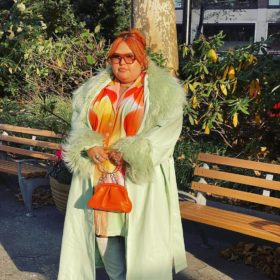
The vibe is shifting, though, and Gen-Zers (with the help of their elder millennials) are proving that it’s possible to take the fun parts of the Y2K aesthetic and leave the bad behind. Plus-size fashion influencers like Tiaynna McClyde, Jessica Torres, Karina Gomez and Jessica Blair are reclaiming and ushering in a new-and-inclusive version of the 2000s aesthetic.

It’s still hard for me to fathom this updated version of a time that was so fraught with an obsession of being thin and when to be desired, cool and worthy meant building a case against the body I was given — especially when body standards haven’t changed much at all except for the speed at which they shift. But perhaps this trend, re-emerging in a time of more body-size acceptance, is offering people like me the chance to reimagine it. I won’t be buying into the Miu Miu micro-mini any time soon, but low-rise baggy jeans? I might just get behind those, if only to let the younger version of myself feel seen.

This article first appeared in FASHION’s October issue. Find out more here.

The post Gen Z Revives Y2K Fashion and Its Obsession with Thinness appeared first on FASHION Magazine.

In the early 2000s, I dreamed of being thin. I flipped through issues of CosmoGirl and J-14, longing for a flat stomach like the pop stars they so frequently featured. I didn’t look like them; in fact, I never would look like them: I was a bullied fat kid who wore soccer shorts and Gap hoodies to school while the popular girls rocked platform flip-flops and jewelled tank tops. But it was more than just closet envy. I studied LiveJournal blogs that taught girls like me how to be skinny. I dieted. I hid my my body and blamed it for keeping me from the life I wanted. I thought thinness was my ticket to being liked, accepted and desired by the world around me.

Since then, I’ve learned to appreciate, and even love, my body as it is, thanks to body-positive influencers, healthy relationships and a lot of therapy. So when I saw miniskirts, low-rise jeans and tube tops saunter down the Fall 2022 runways at Miu Miu, Versace and Diesel, my brain short-circuited. Desperate to pretend this was a bad dream, I took to social media to do some stylish digging. A quick search of “Y2K” on TikTok produced videos—primarily featuring ultra-thin white-presenting women—with more than seven billion views. It was all over Pinterest, too: searches in Canada for “Y2K inspired outfit” and “early 2000s style” increased 20 and 23 times the amount since last year alone, respectively. I thought back to that adolescent girl who hated herself and wondered “Didn’t we all learn our lesson the first time?”

Jessica Torres. Photography VIA INSTAGRAM/@THISISJESSICATORRES

“Nothing tastes as good as skinny feels”

The 2000s’ Y2K aesthetic was one of complete abandon—an embrace of the future with a dash of a retro past. Suggestive Juicy Couture sweatsuits, extreme-low-rise denim and barely-there bandana tops were scattered throughout every issue of Vogue. You need only look at the red-carpet queens of the 2002 MTV VMAs to get the picture: Christina Aguilera, Britney Spears and Paris Hilton.

At the time, these trends were a colourful, fun and gaudy response to the more conservative style of the previous millennium and rode on the coattails of ’90s heroin chic, an aesthetic that introduced us to Kate Moss and the “waif” body type. And while that decade at least favoured baggier designs, in the 2000s, the silhouette became alarmingly slimmer. It was less about fashion and more about celebrating thin bodies. In fact, the body was the fashion.

“Y2K style is largely grounded in thinness,” says Gianluca Russo, columnist and author of The Power of Plus: Inside Fashion’s Size-Inclusivity Revolution. “But it went beyond clothing. Models’ bodies inevitably became an asset in nailing Y2K style. The message was clear: This isn’t for plus-size bodies.” In a 2009 interview about her role in the fashion world, Moss acknowledged her commitment to the look with the statement “Nothing tastes as good as skinny feels.”

And many seemingly agreed with her. Hospitalizations for eating disorders in women of all age groups increased 21 per cent from 1999 to 2009 in the United States alone. And many of these people are still suffering now, as editor Lucy Huber pointed out in a tweet last year: “If any Gen Z are wondering why every Millennial woman has an eating disorder, it’s because in the 2000s a normal thing to say to a teenage girl was ‘When you think you feel hungry, you’re actually thirsty so just drink water and you’ll be fine.’”

But after a toxic 10-year time period, when women like me were taught that our self-worth is dependent on our clothing size, the tides slowly began to turn.

Karina Gomez. Photography VIA INSTAGRAM/@LIVINGASKARINA

Is Gen Z to blame?

The body-positivity movement, born from the Fat Rights Movement of the late 1960s, entered small pockets of the internet in the early 2000s but became mainstream with the advent of Instagram in 2010. Fat people began leaning into visibility by using hashtags like #OOTD (outfit of the day), #effyourbeautystandards and #honoryourcurves. And then multi-hyphenate Sonya Renee Taylor’s spoken-word video of her poem “The Body Is Not an Apology” went viral, leading to an international movement and groundbreaking book, both of the same name.

The movement made its way to TikTok, too, with the hashtag #bodypositive garnering 6.1 billion views and others like #plussizefashion full of curvy folks  trying on clothes. When I log on to the platform, my algorithm feeds me all of these videos. But it’s mostly just millennials I see creating this content, while Gen Z—the generation known for fighting for diversity, LGBTQIA2S+ rights and ethical consumerism—plays with the Y2K aesthetic. Is body positivity somehow skipping a generation? And if so, why?

Well, according to Russo, there are a number of things to consider, including the fashion cycle: We’ve naturally arrived in the 2000s because it’s the decade that comes after the ’80s and ’90s, which have been trending for the past couple of years. We should also consider that low-rise jeans are new for Gen-Zers; they were either not born yet or too young to enjoy the trend the first time around.

And for many, Russo adds, it’s about nostalgia—which was especially prevalent during the pandemic, a dark and heavy time that made the boldness and brightness of the Y2K aesthetic appealing. The same dark time saw many of us dealing with weight gain, something that is completely normal but has nonetheless impacted our ability to access mainstream fashion.

It’s not necessarily that Gen Z doesn’t care about size inclusivity. After all, the mid-size movement—which promotes representation for people who wear sizes 10 to 16—was born on TikTok. Simply put, other factors just take precedence, and that’s a problem.

Tiaynna McClyde. Photography VIA INSTAGRAM/@TIAYNNAA

Self-esteem in a digital age

“If you’re not seeing people who look like you wearing those fashions, then there seems to be an implicit message that maybe you shouldn’t wear them,” says registered psychologist Kristin M. von Ranson. “It’s hard for youth to learn to see things with a critical eye when diet culture and the thin ideal pervades everything.” Von Ranson has helped bring to light the struggles Gen-Zers face when it comes to body image and social media with the Dove Self-Esteem Project. Its recent study found that more than half of the girls surveyed say that idealized beauty content on social media makes them feel worse about themselves. Eating disorders are on the rise again, too, with the number of anorexia diagnoses in Canadian patients aged nine to 18 increasing 60 per cent from pre-pandemic numbers. Similar numbers were seen in the United States.

Major brands aren’t helping either, with many participating in curve-washing — a marketing tactic that uses size-diverse bodies to sell products on social media without actually providing adequate sizing options to their consumers, making it seem like size inclusivity has come further than it actually has.

Where do we go from here?

Gen-Zers are new to the size-inclusivity conversation and in the early developmental stages of their own body image. “They’re still young adults and teens navigating various harmful messages around body image,” says Russo. “We can’t expect them to fight before they truly grasp what the battle is even about.” This may be true, but Gen-Zers have the upper hand when it comes to spreading the message. They dictate what goes viral, and that’s the tool that will do the most work.

The vibe is shifting, though, and Gen-Zers (with the help of their elder millennials) are proving that it’s possible to take the fun parts of the Y2K aesthetic and leave the bad behind. Plus-size fashion influencers like Tiaynna McClyde, Jessica Torres, Karina Gomez and Jessica Blair are reclaiming and ushering in a new-and-inclusive version of the 2000s aesthetic.

It’s still hard for me to fathom this updated version of a time that was so fraught with an obsession of being thin and when to be desired, cool and worthy meant building a case against the body I was given — especially when body standards haven’t changed much at all except for the speed at which they shift. But perhaps this trend, re-emerging in a time of more body-size acceptance, is offering people like me the chance to reimagine it. I won’t be buying into the Miu Miu micro-mini any time soon, but low-rise baggy jeans? I might just get behind those, if only to let the younger version of myself feel seen.

This article first appeared in FASHION’s October issue. Find out more here.

The post Gen Z Revives Y2K Fashion and Its Obsession with Thinness appeared first on FASHION Magazine.


Protected: I Tried It: Huawei’s Latest Stylish Smartwatch

0

This content is password protected. To view it please enter your password below:

The post Protected: I Tried It: Huawei’s Latest Stylish Smartwatch appeared first on FASHION Magazine.

This content is password protected. To view it please enter your password below:

The post Protected: I Tried It: Huawei’s Latest Stylish Smartwatch appeared first on FASHION Magazine.